

By Rugwed Damle
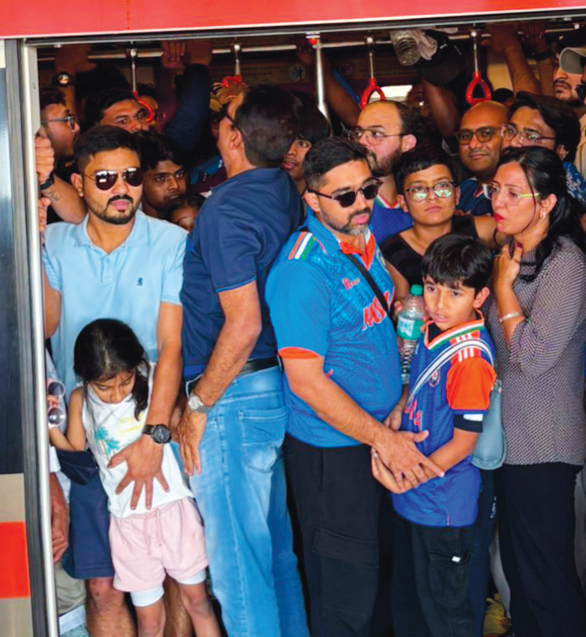
AHMEDABAD: On March 8, 2026 all roads led to Narendra Modi Cricket stadium. The occasion, India’s title defence in the T20 World Cup Final against arch rivals New Zealand. The roads were covered with Orange and Blue jerseys & flags with face painted fans pouring in from all across the globe to watch their team and its superstars.
The evening had already grown into something larger than a match. The build-up unfolded more like a festival than a sporting event. Taking stage first was Gujarat’s beloved Falguni Pathak who pretty much transformed the stadium into a grand scale Garba with tens of thousands instinctively breaking into their steps. Then the energy shifted. With Sukhbir who moved the stadium from a dance to sing-along celebration. The crowd started bouncing, turning the ground briefly into a giant dance floor with nostalgic tracks like Gal Ban Gaye & Oh ho ho. The final flourish arrived with Ricky Martin, whose appearance carried echoes of the 1998 FIFA World Cup anthem that once defined global sporting spectacle.
Only after this music and dance party faded, did the night return to its purpose: India versus New Zealand, a World Cup final waiting to be decided. After winning the toss New Zealand chose to bowl first. India’s reply to the occasion was immediate and emphatic, both openers turned the power play overs into a statement rather than a settling-in period. Abhishek Sharma, who set the tone early, attacked from the outset ensuring the powerplay belonged firmly to India. Sanju Samson matched the tempo stroke for stroke, the pair batting with freedom and authority. Even when Ishan Kishan joined the charge, the momentum only grew; the run rate hovered near thirteen an over. By the 15-over mark, India looked well on course for something extraordinary — with whispers of a 260–280 total beginning to circulate around.
But then the innings shifted. The quick succession of wickets – stalled the momentum and forced a reset. India still finished with a formidable 255/5. Only after the wickets fell did the true quality of the opening assault fully sink in — the first three had made a difficult surface look deceptively easy.
New Zealand’s chase began under immediate pressure, the steep target forcing them into attack from the outset. A few early boundaries offered brief encouragement, but India’s bowlers quickly tightened their grip, striking often enough to prevent any meaningful partnership. New Zealand managed only 52 for 3 in the powerplay, well behind India’s 92.
Regular wickets disrupted their momentum and prevented any meaningful partnerships from taking shape. The required rate kept climbing, and with every wicket the chase slipped further away. New Zealand fought, but the chase never quite found its rhythm. India’s bowlers kept tightening the game until the outcome slowly revealed itself under the lights handing India a comprehensive 96-run victory.
And when the final wicket fell and the celebrations began, the moment carried a deeper meaning. Since 2023, Ahmedabad had lingered in Indian cricket’s memory as a place of heartbreak. On this night, as India lifted the trophy, that shadow finally lifted too. The jinx of Ahmedabad had been broken. In the post-match press conference, Suryakumar Yadav said “The start with the bat set it up,” he said. “After that we just had to stay calm and do the basics well.” It sounded simple and straightforward, though on a night like this, under the lights at Narendra Modi Stadium, very little about it had really been simple or straightforward.