Tag: Covid-19

  • How Seniors Can Register for the Corona Vaccine in Houston Area

    How Seniors Can Register for the Corona Vaccine in Houston Area

    By Aaron Barker

    Houston: As more doses of the coronavirus vaccine arrive in the Houston area, officials are ramping up the process of administering those shots.

    Vaccines are only available to people who are eligible under phases 1A and 1B of the state’s distribution plan.

    No matter where you live or which group you are in, officials are urging people to practice patience. The demand for the vaccine is outpacing the available supply, and appointments are also quickly filling up. More appointments will become available as supply increases, officials said.

    If you are eligible to receive the vaccine, here’s the information provided by government officials about how to register to receive it. Eligible people can also contact their health care provider directly for information about how to receive the vaccine.

    Harris County

    The Houston Health Department has launched an online registration portal and phone line where people can register for appointments. Demand has been high and long hold times have been reported for the phone line.

    On Jan. 4, the Health Department announced that its Covid-19 vaccine clinic appointments are booked for the rest of the month of January and additional appointments are not being taken at this time. Officials said that as the city’s allocation of doses increases, more appointments will be available.

    Online: houstonemergency.org/covid-19-vaccines

    Phone: 832-393-4220 (Monday, Wednesday, Friday and Saturday from 7:30 a.m. to 4 p.m.; Tuesday and Thursday from 7:30 a.m. to 5 p.m.)

    Fort Bend County

    Fort Bend Health and Human Services has launched an online registration portal where people can register for appointments when they receive shipments of the vaccine.

    On Jan. 4, county health officials said that all appointments had been booked and that more appointments would become available as shipments of the vaccine arrive.

    Online: fbchealth.org

    Galveston County

    Galveston County Health District officials said they will begin administering doses of the vaccine to people who are over the page of 65 by appointment only. Officials said appointments can be made by phone, but supply is limited. For more information about Galveston County’s vaccine supply and required forms, go to gchd.org/covidvaccine.

    Phone: 409-547-4015 (Opens 9 a.m. Jan. 6).

    Montgomery County

    Officials said they do plan to vaccinate some members of the general public when the vaccine is made available to the county. Information about how to make an appointment will be posted at mcphd-tx.org when the doses are available.

    Brazoria County

    Officials said vaccine distributions will take place at Brazoria County health clinics once the county receives its shipments of the vaccine. In the meantime, officials are encouraging residents who are eligible to receive the vaccine to check with pharmacies, physicians and urgent care facilities on the availability of the vaccine at those locations.

    Residents should follow the latest updates at brazoriacountytx.gov.

    The Texas Department of State Health Services has created a map of health care providers that have been provided doses of the vaccine. You can click here (https://txdshs.maps.arcgis.com/apps/webappviewer/index.html?id=91ac7fb5e5fd47e7ada4acfe4a05920a)to view it. Officials said patients should contact the provider directly to determine the availability of the vaccine. This map is maintained by DSHS. — Click 2 Houston

  • Houston Seniors Begin Getting Long-Sought Covid-19 Vaccinations

    Houston Seniors Begin Getting Long-Sought Covid-19 Vaccinations

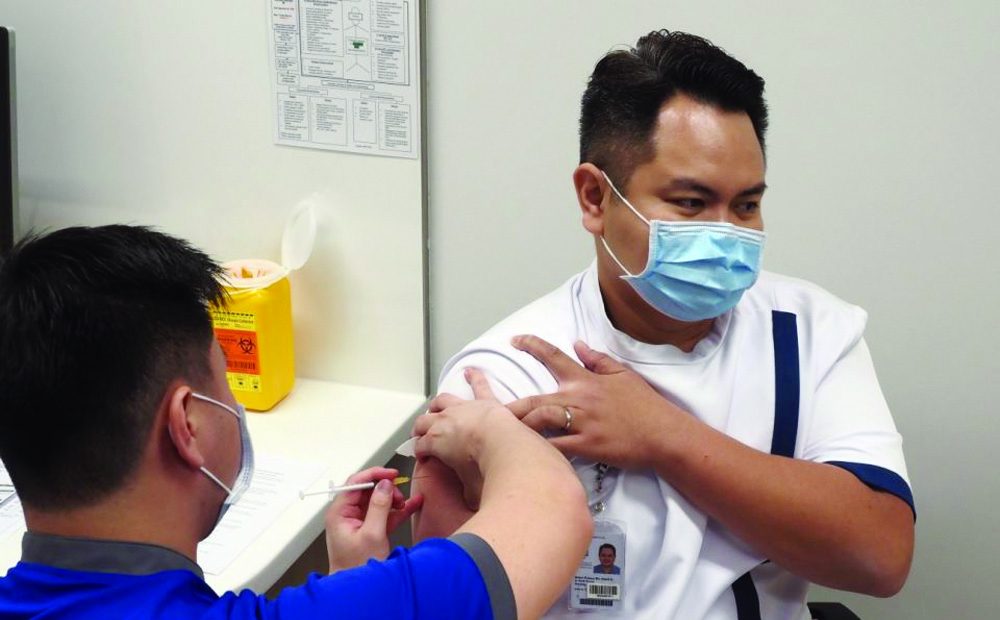
    Manoj Biswas, 79, a retired OBGYN, receives his first dose of the Pfizer-manufactured COVID-19 vaccine from RN Lizette Coronado on Tuesday, Dec. 29, 2020, at Houston Methodist Hospital in the Texas Medical Center. The hospital started including seniors and patients with chronic conditions this week. Photo: Mark Mulligan

    By Dylan McGuinness

    Houston: Hospitals and medical providers in Houston have begun vaccinating patients who are senior citizens this week, as the sweeping public inoculation campaign extends past front-line workers for the first time.

    Some 3,000 people who are 75 or older are scheduled to get their first shots this week at Methodist Hospital. Memorial Hermann has scheduled nearly 5,000 of its medical group patients who are at least 65. CVS started a targeted effort at long-term care facilities Monday with the hopes of eventually vaccinating 275,000 patients. Each of those providers began vaccinating those residents this week, while similar plans are underway — though not quite as far along — at MD Anderson, Baylor College of Medicine and Harris Health, among others. They are all continuing to vaccinate front-line workers as well.

    Manoj Biswas, 79, a retired OBGYN, received his first dose of the Pfizer-manufactured COVID-19 vaccine from RN Lizette Coronado on Tuesday, Dec. 29, 2020, at Houston Methodist Hospital in the Texas Medical Center. The hospital started including seniors and patients with chronic conditions in their vaccination program this week.

    “A lot of us are running those campaigns side by side,” said Roberta Schwartz, an executive vice president at Methodist. “What we’ve found is we can maximize the number of people coming through if we run them side by side.”

    The expansions mark the region’s entry into the next phase of the state’s vaccination plan. The first, Phase 1A, prioritized front-line workers in hospitals, emergency medical technicians, school nurses and others. Phase 1B includes seniors over 65 and others over 16 with certain high-risk conditions. They include cancer, chronic kidney diseased, COPD, heart conditions, solid organ transplantation, obesity, pregnancy, sickle cell disease and Type 2 diabetes mellitus.

    The Texas Department of State Health Services remains in Phase 1A but has guided providers to begin moving toward new populations if they have reached all willing participants among front-line workers. Still, they have to reserve capacity for front-line workers as they move on. Houston Chronicle

  • Mayor Urges Houstonians to Limit Holiday Gatherings to Household

    Mayor Urges Houstonians to Limit Holiday Gatherings to Household

    Houston: Mayor Sylvester Turner and Dr. David Persse, the city’s leading health expert, talked Monday about how Houstonians should proceed with celebrations this holiday season during the coronavirus pandemic.

    Turner said the percentage of people receiving positive results from their COVID-19 tests, known as the positivity rate, was at 7.9%, up from a low of 5% five weeks earlier.

    “We are moving in the wrong direction,” Turner said.

    Thanksgiving is just around the corner, and most health experts are concerned crowded gatherings and celebrations will trigger another surge of coronavirus cases. Recently, Texas became the first state to reach more than 1 million cases.

    “Don’t invite COVID for Thanksgiving dinner,” Turner said during Monday’s news conference.

    Turner said large gatherings with people who don’t live in the same house could lead to another spike in cases.

    “As we approach the holiday season … Thanksgiving is upon us. … These traditional gatherings … are not the way to proceed,” he said. “This virus thrives on gatherings and will take advantage of holiday festivities to sicken our loved ones and further spread through our community.”

    Persse said around 40% of people infected with COVID-19 don’t show symptoms and often spread the virus unknowingly.

    “The person you’re most likely to infect is a member of your own family,” Persse said.

    Both Persse and Turner said the city has plenty of free test sites offering quick results.

    “The more people who get tested, and the more frequently that we as individuals go to get tested, the more empowered we are as individuals to not only protect ourselves but also to protect our family workers and our co-workers and our neighbors,” Persse said.

    Harris County COVID-19 Threat Level System remains at a level 1 red, which means residents are strongly advised to limit outings and contact with others as much as possible. It’s also an indication that overall coronavirus breakouts are a concern for local health officials.

    Harris County Judge Lina Hidalgo on Tuesday encouraged everyone in the county to get tested for coronavirus, pointing to alarming COVID-19 trends.

    Hidalgo also encouraged Harris County residents to cancel gatherings — both large and small — unless you are with your household. She is asking residents get tested for COVID-19, regardless of symptoms, and sent out an emergency alert to residents Tuesday evening.

  • One of Our Own’s Covid-19 Journey from Ventilator to Back Home

    One of Our Own’s Covid-19 Journey from Ventilator to Back Home

    By Lisa Grey

    Houston: In early March, Susham “Rita” Singh, then 65, took time off from selling appliances at the Galleria-area Home Depot. Her husband and her daughter — a doctor — yelled at her, warning her against flying to India for her annual visit with her mom. This new coronavirus was wreaking havoc in other countries, and airports and international flights seemed a bad idea.

    But Rita’s mom was 90, and really, how dangerous could the trip be?

    Rita flew back to Houston on March 21. On one of her flights, someone coughed a lot.

    Home Depot required her to quarantine after the international trip. She did it reluctantly: She loved her job, loved the store’s hubbub, loved talking to people.

    On March 24, she felt nausea and stomach pain. She thought her acid reflux was acting up: no big deal.

    As she grew sicker, her doctor daughter grew more alarmed. Silky Singh Pahlajani, a neurologist, lives in New York City, where COVID-19 was overwhelming hospitals. Silky, 38, didn’t feel sure that her mom’s problem was COVID-19 — gastrointestinal distress was only beginning to be recognized as a symptom — but whatever it was, Silky felt sure it was serious. On the phone, she urged her mom to see a doctor.

    Rita resisted. This was one of her regular tiffs with Silky: Other than basics such as annual checkups, the doctor’s mother avoided doctors. She preferred home remedies. And so far, that had worked fine: Rita was healthy and full of energy. In the 30-plus years she’d lived in the U.S., she’d never been hospitalized.

    She made it clear to her family that she didn’t intend to change, either. If she were ever severely ill, she’d told them, she didn’t want extreme measures taken to save her life. “She thinks she’s immortal,” Silky grumbled.

    But this time, Rita’s home remedies weren’t enough. After a few days she was so fatigued that she couldn’t stand. She submitted to a virtual doctor’s visit, and was commanded to go to an ER immediately for hydration.

    She was rolled into a small west Houston hospital in a wheelchair. Then she blacked out.

    Silky went into hyperdrive, constantly trying to talk with the doctors treating her mom. Furious that the small hospital was waiting for test results before treating her mom for COVID-19, Silky insisted Rita be transferred by ambulance to Houston Methodist in the Texas Medical Center. Being at the bigger hospital, Silky thinks, saved her mother’s life.

    Rita’s lungs were failing fast. A pulmonologist told Silky he’d never before seen a chest X-ray go completely white in 48 hours.

    Silky knew that a ventilator was precisely the kind of extreme measure that her mother wouldn’t want. And as a doctor, she knew why ventilators are any doctor’s last resort. They leave a patient vulnerable to infection, lung damage and delirium. Many patients put on ventilators don’t survive, and the longer they’re on ventilators, the worse their chances. As a neurologist, Silky had seen the brain damage and strokes that a ventilator can cause — exactly the kind of impairment that her strong-willed mother would hate most.

    But Silky couldn’t let her mother die. Roughly 24 hours after Rita blacked out, she was intubated for a ventilator.

    The family, not allowed to visit Rita in the COVID ICU, talked to her unconscious body via an iPad. They hoped she heard them somehow.

    The weeks crawled by. Rita’s lungs improved, but COVID-19, Silky says, “is like a hurricane that blows through your body.” Complication after complication arose. Rita’s blood pressure dropped. Her liver was damaged. Her kidneys began failing, and she needed dialysis.

    Silky consulted frequently with Rita’s medical team, which she considered top-notch. And as different problems arose, Silky called almost every specialist she knew — friends from residency, from her various trainings, anyone she could think of — to pick their brains.

    At one point, during the weeks when Rita should have regained consciousness but didn’t, it seemed that she might have had a massive stroke — the kind of problem that Silky herself treats. But an MRI showed no blood clot.

    Still, as the days ground on, Rita’s prospects grew dimmer. By April, the family was bracing themselves: There was an 80 to 90 percent chance that Rita would die.

    “Encephalopathy” is doctor-speak for “some kind of problem with the brain.” To treat it, Rita’s medical team tried steroids.

    After the first dose, she opened her eyes. She wasn’t responsive, but the family was thrilled. “We’ll take it!” Silky said.

    Rita improved. And at the end of April, she woke up.

    She remembers opening her eyes, not knowing where she was, and hearing a doctor she’d never seen before tell her that she was at Methodist Hospital. She didn’t understand what had happened. Her body was stuck full of tubes. She was in pain and confused.

    She planned to escape when the nurses weren’t in the room. From her bed, she considered various routes: the window, the hallway. But when she at last got her chance, she found that she couldn’t move her hand to rip out the tubes. In fact, she couldn’t move at all. She couldn’t even call for help: Her voice was gone.

    Where, she wondered, was her family?

    Slowly she began to understand the nightmare she’d woken into. And at last her family members, thrilled, began to appear to her on the iPad. Rita beamed at her husband. And she beamed, too, at Silky’s sister, now seven weeks more pregnant than she’d been when Rita blacked out.

    But Rita glared at her doctor daughter. It was Silky’s fault, she thought, that she was here in this condition. Silky knew that she’d have preferred to die.

    But there she was, alive. In their video visits, to keep her spirits up, the family dangled the prospect of her first grandchild’s birth. She wanted to see that, didn’t she?

    On June 17, after an awful seven weeks on a ventilator, Rita was at last able to leave the hospital. The sunlight was beautiful. In the car she opened the window to feel the wind, to hear the birds.

    The next day Silky’s sister gave birth to a girl. In a photo taken a few weeks later, on the first day that Rita was strong enough to hold the baby, the new grandmother is beaming.

    With therapy she’s getting stronger, Rita says now. She’s anxious to return to work.

    And she has forgiven Silky for keeping her alive. In fact, she’s now grateful for the extreme measures. She tells Silky, “You are my angel.” And she warns her doctor daughter, sternly, to be careful not to catch COVID. — Houston Chronicle

  • UMMC TX President Syed Mohiuddin: A Frontline Hero for the Underserved

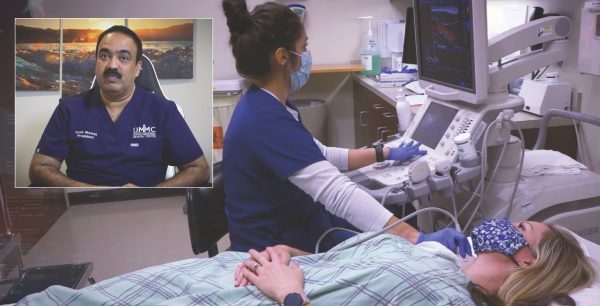
    UMMC TX President Syed Mohiuddin: A Frontline Hero for the Underserved

    Houston: With the ever-changing landscape of America’s healthcare system, it is becoming more and more difficult to find healthcare providers and facilities that value patient care and satisfaction above everything else. One hospital stands out in Houston, Texas, even going as far as only requiring a photo ID for covid-19 testing. United Memorial Medical Center (UMMC) has gone above and beyond to provide the Houston community with ethical, compassionate, and conscientious healthcare, especially to underserved, low-income, rural, uninsured and under-insured communities.

    UMMC President  Syed Rizwan Mohiuddin was already an accomplished businessman and entrepreneur before he entered healthcare. “My inspiration to enter healthcare came from my mother being sick for four years,” said Mohiuddin. “I learned about the difficulties patients and their families go through when they have little or no health insurance. Learning more about how hospital systems and nursing care facilities work motivated me to work with the underserved communities.”

    When the coronavirus pandemic began, UMMC was the first hospital to offer free drive-through testing. With the high demand and low supply of testing kits, medical supplies and staff were being funneled into hard-hit areas like New York City and Washington state, making it difficult for Texas hospitals to get a hold of vital resources to fight the pandemic. “Most hospitals were not equipped to handle drive-through testing and there were a lot of protocols they needed to follow. With us being a smaller hospital, we were able to come together very quickly in order to pick up supplies and testing kits,” said Mohiuddin.

    Mohiuddin and his team were also quick to act in securing personal protective equipment (PPE) for their staff, a task daunting for many healthcare professionals throughout the United States. Through a special arrangement with FedEx, Mohiuddin was able to charter PPE directly from Hong Kong, China to provide necessary safety measures for his staff.

    Mohiuddin has guided his staff to put patient care and satisfaction above all else, making sure that no one is turned away based on their gender , ethnicity,  economic or insurance status everyone should be treated with respect ,dignity and get quality care. The covid-19 pandemic was no different. “We became the first hospital in Houston to offer free testing to the public, requiring only a photo ID and no promise or obligation of payment.” Mohiuddin stated that UMMC was able to do this by billing to the insurances of the 10-15% patients who did have insurance that paid for testing. “We are able to use some of those payments to pay our bills and stay afloat during the pandemic; and some patients qualify for payment through the CARES Act.” For the rest of their patients, UMMC aborbs the cost in order to ensure no one in the community was limited by their ability to pay for testing.

    Although many patients have cancelled or postponed elective procedures, UMMC has stayed busy, even working with the US Army to treat coronavirus patients. However, Mohiuddin stated that testing rates have decreased in recent weeks. “People are getting a little too comfortable and are not getting tested as much as they were before,” he said. “It is important to still get tested if you’re experiencing symptoms, especially if you have any underlying comorbidities.” UMMC is still offering free testing to the public and encourages people to get tested, if necessary.

    On Sept. 4, UMMC held a farewell dinner for a team of medical professionals sent by the US Army to help battle the covid-19 pandemic. With Mohiuddin’s hard work and diligence, UMMC had an established relationship with the Southeast Texas Regional Advisory Council (SETRAC) and the Texas Department of Emergency Management in aiding underserved and rural communities in Southeast Texas. Through their work with SETRAC, State of Texas, state and members of Congress like Sheila Jackson Lee recommended UMMC to the US Army as a Covid-19 taskforce partner. “SETRAC recommended us to the US Army,” said Mohiuddin. “They left our facility pleased with their time and experience here. We provided them with their own wing of the hospital with about 40 beds and made sure to let them run things using their own protocols and methods of practice.”

    With four locations and dozens of specialties, UMMC is currently working on a comprehensive cancer center to serve underprivileged patients. “Chemotherapy drugs are very expensive. If you don’t have good insurance, you have to go to a government-funded hospital,” said Mohiuddin. “By the time it gets to your turn, chances are your cancer has progressed to the next stage and your prognosis has worsened. We want to make cancer treatments more attainable to patients who can’t get into MD Anderson and give them the proper treatment in a timely manner.” The facility will be opening soon in Sugarland on Highway 6.

    This isn’t the first time UMMC and Mohiuddin have opened a specialized facility to assist underserved and rural communities. In 2018, they opened the Texas Rapid Detox Center. With almost 12 million Americans misusing opioids, the scarcity of such recovery centers has been increasingly problematic for low-income areas. “When visiting California, I noticed how celebrities were able to use this method of detoxification to get themselves clean. However, the method is extremely expensive and insurance usually does not cover the cost,” Mohiuddin said. “So we decided to take this luxury process and offer it to everyone. Our success rate is 100%.”

    With the guidance of Syed Mohiuddin, UMMC stands out through its effective management, optimized strategies, rapid initiatives, efficient team work, unmatched coordination and strong commitment for unparalleled healthcare. Through state of the art technology, top physicians, and remarkable compassion, UMMC has strived to exceed the expectations of its patients and their families. — Alsha Khan, Editor In Chief Pakistan Chronicle Weekly News